
Why the world feels unbearable right now
I have a complicated relationship with the news. As someone who has spent ten years sitting with people at their most overwhelmed - in therapy rooms, in business - I feel a professional pull to stay informed, and an ever-increasing pull to stay away from it. It only takes a moment. Scan your news website of choice, or scroll through social media, and within seconds, from the comfort of your home or your morning commute, you've read about a political crisis, a shooting, an economic disaster, a war, antisemitism, starvation, the threat of catastrophe. The world, depending on which screen you look at and for how long, can feel like it is perpetually on fire.
So why comment on all of this? Because I think the experience of chronic, ambient dread deserves a serious psychological explanation. And that explanation begins not with the state of the world, but with the state of your brain.
Your Brain Is Doing Exactly What It Was Designed To Do
The psychiatrist and neuroscientist Stephen Porges spent decades developing what he called Polyvagal Theory, a framework for understanding how the human body continuously and unconsciously evaluates its environment for signs of safety or threat. He called this process neuroception: a below-conscious scanning of cues, not just in our immediate surroundings, but in faces, voices, bodily sensations, and context. Perhaps, his most crucial insight is that this process does not require conscious awareness. It does not ask for your permission. It is happening right now, as you read this.
What Porges's work illuminates is that the brain's threat-detection system is ancient, extraordinarily sensitive, and not particularly good at distinguishing between what is happening to you and what is happening near you. Or, increasingly, what is happening on your phone.
When you read that a city has been bombed, or that food prices are rising because of events on the other side of the world, your body will respond. The state of readiness that your ancestors needed when a predator was nearby is activated, in response now to a headline. The body does not really care that the threat is abstract, distant, or that there is nothing you can do about it. It registers danger and begins preparing.
Now multiply that response across months. Years. Across a news cycle that never ends and a social media feed designed - as I wrote about last time - to keep you in a state of aroused attention. What you get is something the psychiatrist Bessel van der Kolk articulates so powerfully in his work on trauma and the body: that stress does not stay in the mind. It is embodied. It lives in the tightness of your chest, the clench of your jaw, the body that fights relaxation and deep sleep, and the short fuse you didn't used to have.
The Window Is Narrowing
The neurologist and psychiatrist Dan Siegel offered a concept I find myself returning to constantly in clinical practice, the window of tolerance. It describes the optimal zone of physiological arousal within which a person can function well: processing information, regulating emotions, staying curious and flexible rather than reactive or shut down. When we are within this window, we can handle difficulty. We can have hard conversations, make good decisions, be present with the people we love.
What chronic, ambient stress does - the kind that accumulates across months of economic anxiety and geopolitical dread and digital overstimulation - is narrow that window. Gradually, it reduces the range within which a person can tolerate discomfort before tipping into either hyperarousal (anxiety, irritability, reactivity, the feeling that everything is urgent) or hypoarousal (withdrawal, numbness, shut-down, resignation).
This is why small things feel enormous right now, for so many people. It is the predictable consequence of a system that has been operating at the edge of its range, without recovery.
We Are Witnessing More Than We Were Ever Meant To
Historically, a human being witnessed the suffering of their tribe, of their village, of the people physically proximate to them. That suffering was painful, but it was bounded. Now, we witness the world's.
The capacity for empathy - one of the most beautiful features of the human mind, and one that is genuinely neurologically costly - is being drawn upon at a scale it was never designed to operate at. We absorb grief and horror and injustice without the capacity to act, or mourn, or integrate what we've seen. And then we scroll on.
So What Do We Actually Do With Any of This?
Let me offer three things that I think genuinely matter, grounded in the science above rather than in generic self-care advice.
The first is to become genuinely intentional about your information diet. Not avoidant, but intentional. There is a meaningful difference between staying informed and immersing yourself in a continuous, unprocessed stream of global suffering. Consider not having news playing in the background, not checking first thing in the morning when your threat-detection system is already at its most sensitive, and choosing when you engage rather than letting the algorithm decide for you. Reading a considered summary or a long-form piece requires more of you than doomscrolling, and it gives more back. You can be an engaged, thoughtful citizen of the world without treating every headline as something your body must respond to in real time.
The second is to notice when the stress cycle is incomplete and to take that seriously. Stress was designed to move through the body, through physical effort, through tears, through the regulated contact of another human presence. When it doesn't move, it stays. So ask yourself honestly, when did you last genuinely complete it? And consider what you need. To laugh, to cry, to share, to rest alone…
The third is to restore rhythm through rituals. Small, repetitive, consistent practices, a morning sequence you actually follow, a wind-down that signals something to your body, movement at a regular time, music that is familiar and grounding. Learn grounding and stabilization techniques (come to me if you need the most clinically effective ones in your life). Your brain is constantly scanning for signals that things are, in some local and immediate way, okay, so give it something concrete and consistent to find.
As always, hit reply. I'd genuinely love to hear your reflections.
Dr Matt
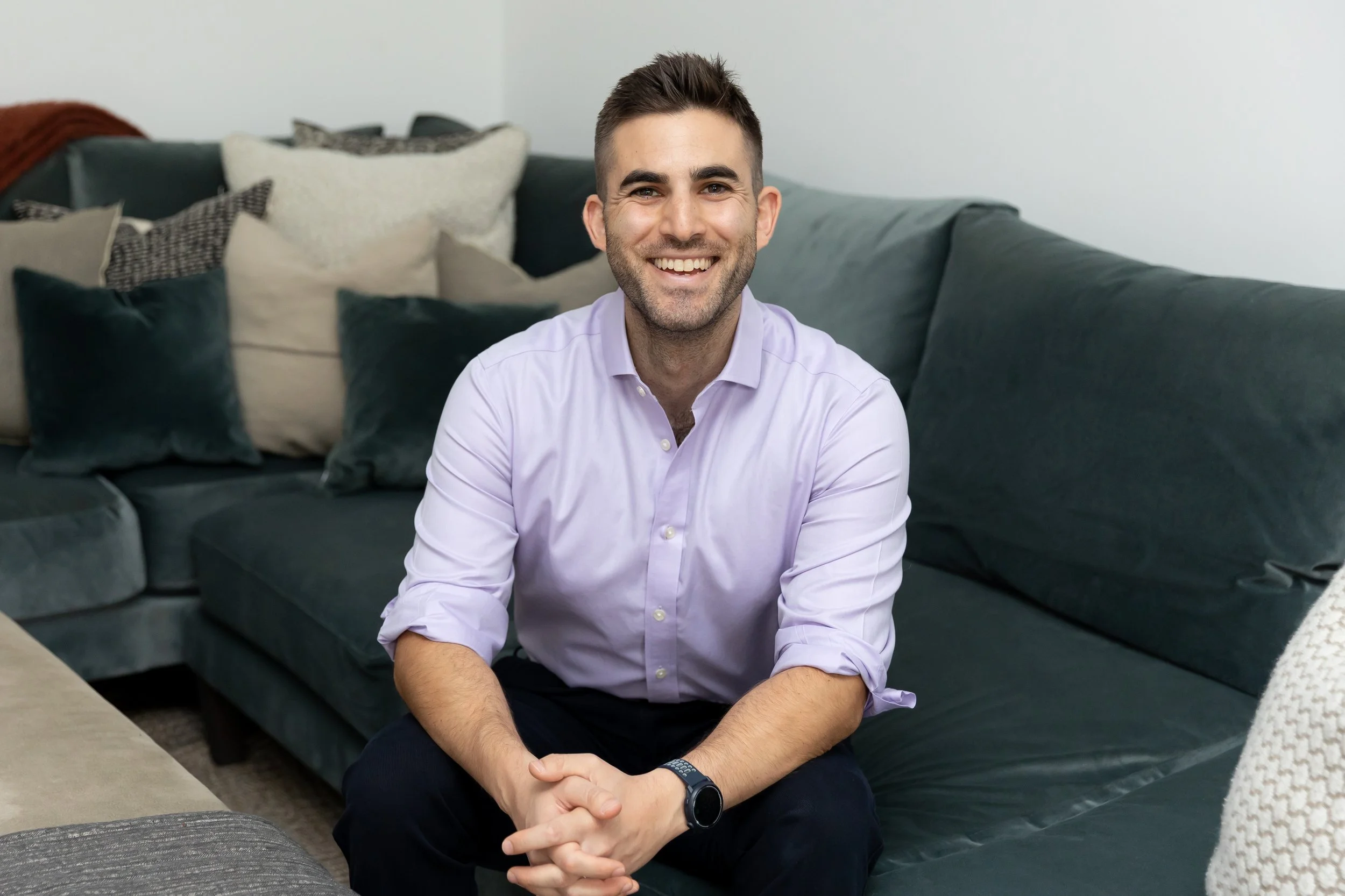
Dr Matt Slavin
Clinical & Performance Psychologist · Auckland · Online
If your nervous system - or your team's - has been running on high alert for a while, there's more support available than a better news diet.
Not sure where to start? Get in touch and tell me a little about what you're navigating. I'll point you in the right direction.
