
When What Once Kept Us Safe No Longer Fits
I’m back.
First Friday newsletter of 2026, which feels worth marking, partly because I missed writing these more than I expected, and partly because quite a lot has happened since the last one.
If you didn’t read my previous piece about leaving the UK, you can catch up here, but the short version is this: we’ve moved. I’m now writing to you from New Zealand, where the days involve sun, sea, space, and slightly more SPF than I ever was used to back home. There’s also been rain (a lot of it), barefoot children, and views that still catch me off guard.
It’s been settling, stretching, and quietly disorientating in equal measure. Change, takes time and I’m giving myself the time to settle, not hurrying what I know will be a long process.
And, just to keep things balanced, there have been a few less postcard-worthy moments as well, including some broken ribs courtesy of my first Jiu Jitsu session back after a long lay-off (don’t worry, I’m fine and yes, you should see the other guy…).
All that to say: life has shifted.
And with that shift, it feels right to return to these Friday reflections and more of Matt’s musings about what it means to be a human with an ancient brain trying to navigate a very modern world.
And today, I want to talk about change.
More specifically, about why the parts of us we most admire - our drive, our toughness, our reliability, our ability to keep going - are often the very parts that struggle most when real change is required.
Sometimes, the part of us that keeps going does so because it once had to, not because it’s still the best guide for where we are now.
Let me explain what I mean.
….
In my work, people often arrive describing themselves in terms of strengths: driven, resilient, capable under pressure, the one others rely on, the person who gets things done. And all of that is usually true. What’s less often spoken about is where those qualities came from.
From a psychological and evolutionary perspective, humans are extraordinary at adaptation. When the conditions around us are uncertain, demanding, or emotionally complex - especially early on - we adapt in kind. We learn what works in our immediate world, in our key relationships and we become what the environment asks for.
The child who needs to stay alert becomes the adult who notices everything.
The child who learns not to add to the load becomes the adult who carries it in silence.
The child who cannot reliably turn to others becomes the adult who builds a life around self-reliance.
Our strengths come from somewhere and they always come from an intelligent design - in response to the world we live in and people we live with.
The difficulty is that these adaptations don’t come with an expiry date.
…
One of the most important shifts in my own thinking came when I trained in the Dynamic-Maturational Model (DMM) of attachment under Pat Crittenden. It challenged a much simpler idea of attachment as something fixed, or primarily about closeness and security, and instead framed it as something more fundamental: a protective system, organised around how we detect, interpret, and respond to danger.
Crucially, the DMM doesn’t describe people as having static “styles” that are set early and resistant to change. Instead, it understands attachment patterns as adaptive strategies, responses shaped by context, relationships, and experience. Strategies that develop because they work. Strategies that shift depending on who we’re with, what’s being asked of us, and what feels safe or risky in that moment.
From this perspective, our familiar ways of being - our drive, our self-reliance, our emotional control, our tendency to keep going - are intelligent strategies that evolved over time to help us stay safe, connected, and effective within particular conditions.
And because they are adaptive, they can change.
But there’s an important caveat.
These protective strategies tend to become most active precisely when things begin to shift.
Change introduces uncertainty.
Uncertainty resembles danger.
And ancient systems respond accordingly.
This is why genuine change so often feels harder than staying the same.
The very parts of us we admire — the ones that carried us through — can step forward to keep things familiar, predictable, and controlled, even when what’s being asked of us now is something different.
This is the paradox I see so often.
The qualities that carried you to this point can quietly resist the changes needed to move beyond it.
True change is possible - I see it every day - but it rarely feels calm at the outset. More often, it’s bound with doubt, uncertainty, vulnerability, and fear.
…
As I settle into a new place, a new rhythm, and a slightly slower pace of healing ribs, I find myself asking these same questions too.
Which parts of me are still working as if the old conditions apply? And which might be ready (and needing) to change?
I suspect many of us are asking something similar, whether we realise it yet or not.
Warmly,
Matt
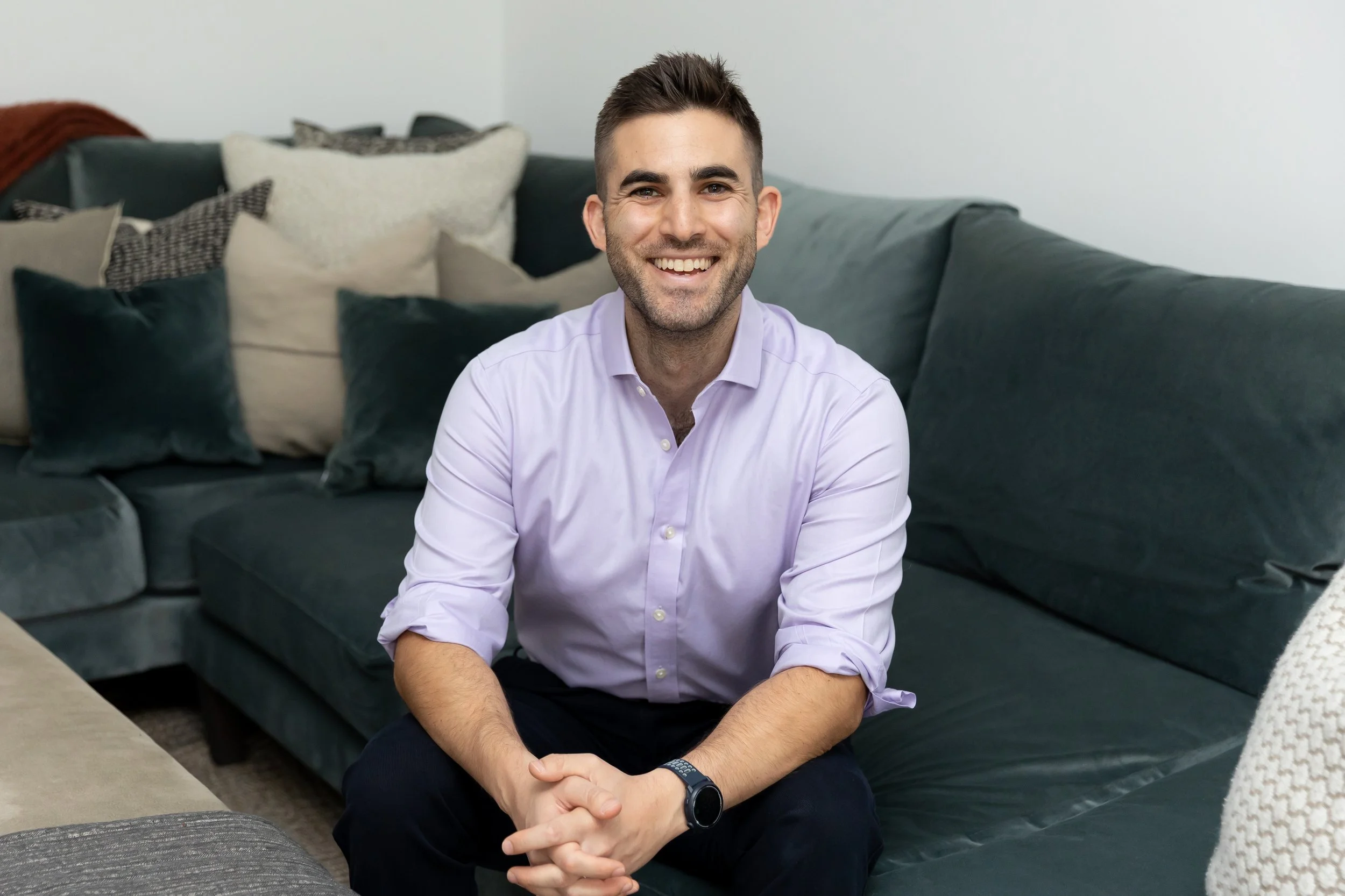
Dr Matt Slavin
Clinical & Performance Psychologist · Auckland · Online
If something in your life, your team, or your organisation is asking to shift - and part of you is resisting it even though you know it needs to - that's often where the most important work begins.
Not sure where to start? Get in touch and tell me a little about what you're navigating. I'll point you in the right direction.
